
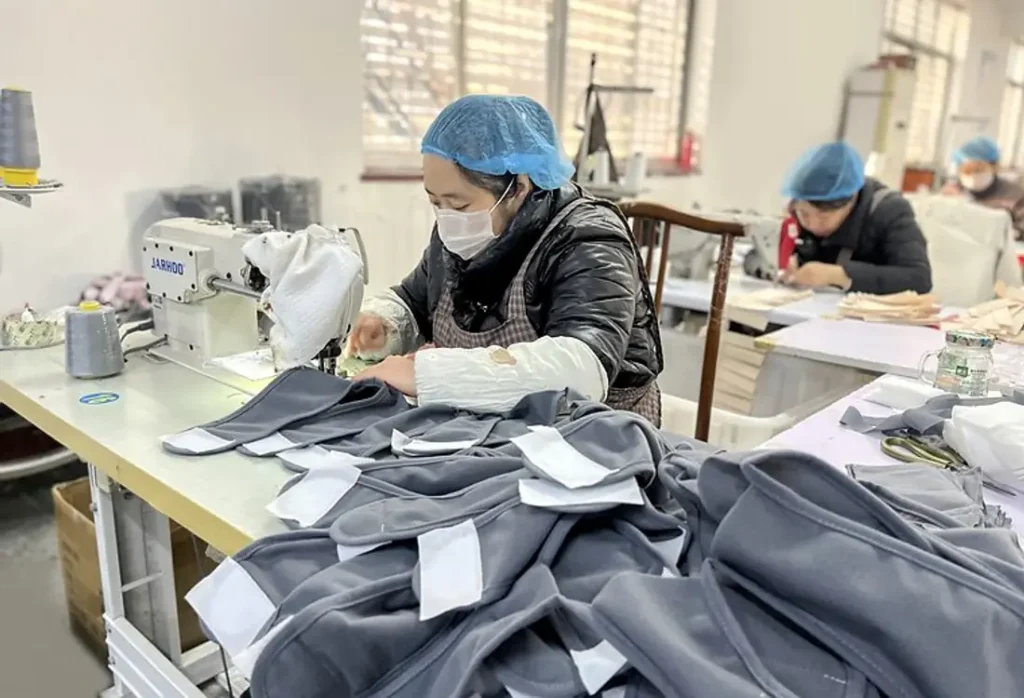
A development sample is useful when the buyer and supplier agree on what it is intended to prove. For a Lemaji custom towel, blanket, play mat or gift set, a clear sample brief helps turn a visual reference into measurable product decisions.
Quick answer: how do you approve a baby textile sample?
Compare it against an agreed specification covering materials, dimensions, construction, decoration, labels and packaging. Record revisions by sample version, then confirm the accepted reference in writing. Identify any provisional details before treating the sample as a production reference.
1. Define the purpose of the first sample
Ask whether it will demonstrate shape and sewing, the selected fabric, final artwork or the complete retail pack. A sample made with substitute fabric cannot establish the appearance of the final fabric. Record substitutions explicitly and list what remains to be approved.
2. Supply a complete development brief
- Product reference and dimensioned sketch.
- Material preferences and required construction.
- Artwork files with size and placement.
- Label content and packaging layout.
- Target quantity and intended sales market.
- Required sample scope and requested delivery date.
Confirm sample charges, revision arrangements and timing with Lemaji for the specific project. These depend on the agreed development work and available materials.
3. Review the details that matter for each product
| Product | Sample review focus |
|---|---|
| Hooded towel | Main dimensions, hood shape, binding, embroidery and wash comparison |
| Muslin blanket | Layer count, finished size, print, edges and wash comparison |
| Play mat | Layer assembly, filling position, cover fit and packed format |
| Gift set | Component count, coordinated appearance, insert fit and labels |
4. Give revision comments that can be acted on
Replace “make it better” with numbered comments. For example: “Move the logo to the position marked on photo 2” or “Adjust the finished width to the approved drawing.” Include the sample version and reference measurement. Separate required corrections from new design requests, which may change the development scope.
5. Keep an approval record
Record the sample identifier, approved specification version, artwork version, date and accepted exceptions. Agree which physical reference the buyer and supplier will retain. Ask how the approved details will be communicated to production and checked during inspection.
For supplier assessment, use the factory audit checklist. For product details, consult the play mat and towel guides.
FAQ
Does approving a photo replace approving a physical sample?
Photos can confirm visible details such as artwork placement. They do not establish fabric feel, measurements or care performance. Agree which checks require a physical sample.
What if I change the fabric after approval?
Ask which approvals must be repeated. Record the new material and review the affected appearance, construction and care requirements.
Should packaging be included?
Include it when evaluating retail presentation, gift-set fit or packed dimensions. Otherwise state that packaging approval remains open.
Start a sample discussion
Send your reference, dimensions and material preferences to info@lemajibaby.com. Lemaji can review the requested development scope with you; confirm the deliverables in the sample quotation.