
Quick answer
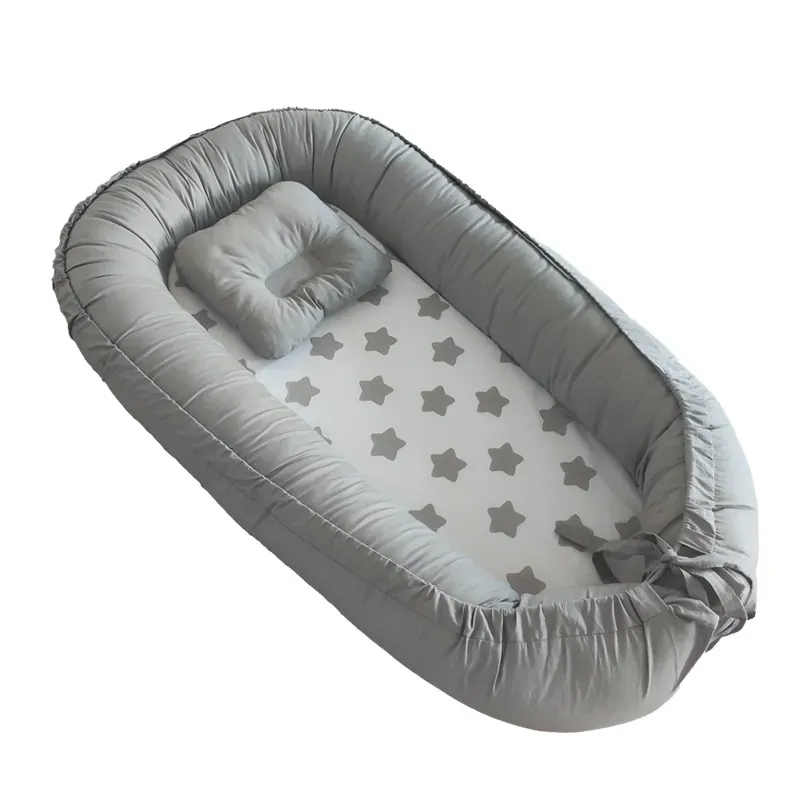
Choose shell, mesh and inner fabrics for a private-label baby lounger with clearer specifications. Fabric selection should balance hand feel, breathability, durability, cleanability and brand positioning.
Why this matters to OEM and private-label buyers
Map every textile zone: top panel, side wall, base, lining, handle and removable cover. A clear written standard makes quotations more comparable, shortens sampling discussions and gives production and inspection teams the same reference point.
What to put in the specification
Specify fiber content, construction, GSM, color standard, finishing and care requirements.
- Intended market, user scenario and target price position
- Materials, construction, dimensions and acceptable tolerances
- Approved color, artwork, labels and packaging references
- Care method, performance checks and required documentation
Sample approval workflow
- Issue a dated brief and identify every open decision.
- Review material swatches or components before the complete sample where possible.
- Measure and photograph the sample against the specification.
- Return one consolidated comment sheet with priorities.
- Seal the approved sample and update the specification revision.
Test the assembled sample for seam behavior, shrinkage, colorfastness and appearance after care.
Questions to ask your manufacturer
- Which specification points are most likely to affect MOQ, cost or lead time?
- Which materials or components require early booking?
- How will substitutions and bulk deviations be communicated?
- What inspections and test reports can be coordinated?
Common mistakes to avoid
Avoid approving from photos alone, using vague terms such as “premium,” changing artwork after material booking, or assuming that a previous product standard automatically applies to a new market. Requirements vary by product and destination; confirm applicable safety, labeling and testing obligations with qualified laboratories or compliance specialists.
FAQ
When should the specification be finalized?
Finalize the controllable details before the pre-production sample and update the document whenever an approved change is made.
Can one reference sample replace written specifications?
No. A physical reference helps communicate appearance and hand feel, but measurements, materials, tolerances, packaging and compliance requirements should remain documented.
How can Lemaji support development?
Lemaji can review your brief, source suitable textile options, develop coordinated samples and prepare production details for baby textile and gift-set programs.
Plan your next custom baby textile program
Explore our baby textile product range, read more buyer resources, or contact Lemaji with your target market, quantities, materials and reference files.
Back to the baby lounger OEM manufacturer and wholesale program for the full model range, material options and OEM/ODM development steps, including cover fabric selection.
Filling and fabric combinations for OEM programs
Fabric choice is only half of the specification. The sections below cover filling and core options by zone, how cover and fill work together, packing trade-offs, and what to put in the brief so samples and bulk match.
Filling and core options
Filling is hard to judge from photos, so it causes many revisions. Our models use polyester (PP) fibre fill, resilient wadding, high-resilience foam and structured foam cores, sometimes layered with 3D mesh. Each fill differs in loft, recovery after compression and how it packs.
| Filling or core | How it behaves | Trade-offs | Packing | Best suited to |
|---|---|---|---|---|
| PP fibre fill | Soft, with loft | Can shift or clump if not quilted or channelled; finished weight must be controlled | Compresses well; check recovery after unpacking | Side bolsters and soft walls |
| Microfibre fill | Fine and smooth | Softer feel; shape depends on how it’s contained | Compresses; verify recovery | Soft covers and lighter designs |
| Resilient wadding (sheet fill) | Even thickness, holds a flat panel | Less loft than loose fibre | Suited to vacuum or compressed packing after sample validation | Foldable and travel bases |
| High-resilience foam | Shape-holding, consistent profile | Must be cut to a drawing; not every foam suits long vacuum storage | Compression must be tested before it’s agreed | Shaped bases and defined walls |
| Structured or firm foam core with 3D mesh | Defined walls and a flat, firm base | Higher material cost; mesh choice affects feel and cost | An alternative foam may pack better but change firmness and cost; a carry bag avoids vacuum packing | Structured nests and premium ranges |
| Layered pad (foam plus wadding) | Combines a stable core with a softer top | More components to specify and inspect | Depends on the layers | Removable-insert designs |
For every option, the brief should state the fill material, target finished weight or thickness, and how it’s fixed: quilted, channelled, loose in an inner case, or cut foam. We record pad thickness and filling weight on the specification sheet, and on repeat orders we track finished weight against the approved sample so the fill stays consistent.
How fabric and filling work together
Pair materials by the product’s job:
- Foldable and travel loungers. A flat, resilient-wadding or fibre base with a printed or solid cotton cover folds cleanly and suits compressed packing. Our foldable travel baby lounger uses a printed cotton cover with resilient-cotton filling and removable components.
- Textured or premium covers. Waffle cotton or velvet covers suit a structured base, so the surface texture is the selling point. See the foldable breathable lounger with a waffle cotton cover, or the portable baby lounger with a corduroy cover and foam pad.
- Fully removable systems. When every part comes apart for washing, pair a stable cover fabric with fill that’s contained in its own inner case, as in the fully removable travel lounger.
- Mesh-led structures. A firm foam wall wrapped in 3D mesh gives defined sides. The mesh grade is a trade-off between openness, feel and cost, so review two or three mesh options as swatches before the full sample.
- One core, several covers. A removable-cover construction lets you offer two or three colourways on one core specification, and spare covers can be quoted as separate line items.
Packing changes the material decision
Compression and vacuum packing cut carton volume, but they need to be agreed at the sample stage. Fibre fills and wadding usually compress well. Foam needs testing, and if the chosen foam shouldn’t stay compressed for a long time, a carry bag or backpack-style packing is the alternative. Check recovery on a sample after it’s been unpacked before you sign off a compressed format. See our retail and e-commerce packaging guide.
What to put in your brief
- Cover fabric for each zone: composition, construction, weight and colour or print reference
- Filling for each zone: material, target weight or thickness, and how it’s fixed
- Which parts are removable, the closure type and position, and the wash method
- Finished dimensions with tolerances and the folded or packed size
- Packing format: PE bag, compressed, carry bag or retail box
- Destination market, intended use as a supervised lounging product, and any test reports you need
- Quantity split by design and colour
Sampling, MOQ and lead time
Sampling takes about 14 days once the specification, materials and customisation details are confirmed. We suggest approving fabric swatches, mesh options and colour cards before the full sample, because a material change after sewing costs a whole revision round. Bulk production takes about 30–45 days after sample approval, with the start date confirmed for each order. The MOQ is 300 pcs per design for ready-stock wholesale models and 1,000 pcs per design for custom OEM development.
Test reports are available on request and are confirmed for each model, material and destination market. Read our guide to golden samples and pre-production samples for how the approved sample controls bulk.
FAQ
Which cover fabric is most common for private-label baby loungers?
Most of our current models start from a cotton cover, such as jersey, waffle or printed woven cotton. The right choice depends on your price position, care label and print plan. Velvet, mesh and blends suit specific positions within a range.
Is foam or fibre fill better for a baby lounger?
Neither is better overall. Fibre fill and wadding are softer and compress well for packing. Foam holds a defined shape but must be cut to a drawing, and its compression and recovery have to be tested. Many designs combine both by zone.
Can we use our own fabric or a fabric like linen?
Yes. Buyer-specified fabrics can be reviewed against the construction, cover fit and care method. Send the composition and a swatch, and we’ll confirm feasibility and sampling.
Can a lounger with a removable cover be vacuum packed?
Often, yes, but it depends on the filling. Fibre and wadding cores usually compress well. Foam cores need a recovery check on an unpacked sample before compressed packing is agreed.
Which documents can you provide for our market?
That depends on the model, its materials and the destination market. Test reports are available on request and are confirmed product by product, so list your market in the brief.
Ready to plan your materials?
Browse the baby lounger collection or the baby lounger OEM manufacturer program, then send your brief with the zone-by-zone fabric and filling details above. We’ll reply with material suggestions, a sampling plan and a quotation.
Email: info@lemajibaby.com | WhatsApp: +86 150 2005 4663