
Quick answer
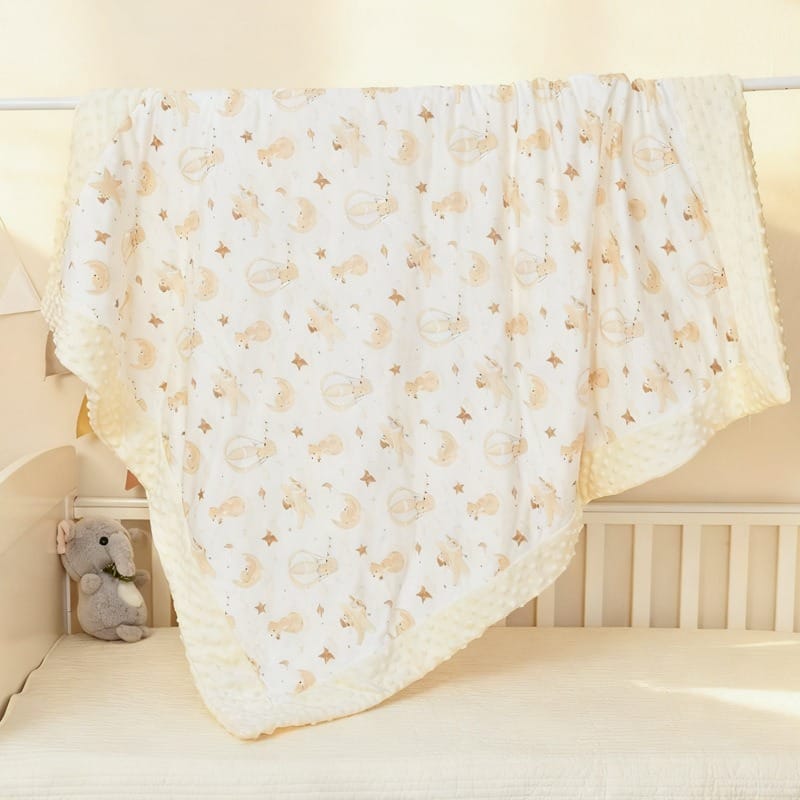
A reversible baby blanket should be specified as one textile system, not as two independently selected fabrics. Buyers need to control the face and reverse materials, finished weight, shrinkage compatibility, edge construction, joining method and appearance after laundering. The safest commercial approval is a full-size finished sample made with the intended production fabrics.
Why reversible construction needs extra control
Pairing a printed woven face with a soft textured reverse can create a distinctive private-label product, but the two materials may behave differently during cutting, sewing, washing and packing. Unequal stretch or shrinkage can cause twisting, puckering, rolled edges or an uneven finished shape.
Specify both sides separately
Printed face fabric
Record the exact fiber composition, weave or knit construction, finished GSM, print method, artwork repeat, ground color and approved hand feel. For placement-sensitive artwork, define the orientation and the acceptable position at seams and corners.
Textured reverse fabric
Describe the reverse by composition, construction, pile or dot height, GSM, color and finishing. Do not rely on a broad trade name alone: two fabrics sold under the same name can differ substantially in stretch, density and recovery.
Combined finished weight
Specify the target weight for each layer and for the completed blanket. Combined weight influences drape, seasonal positioning, parcel cost and carton utilization.
Joining and edge options
Common constructions include turned-and-topstitched edges, binding, overlocked seams and quilting or tack points. The chosen method should control movement between layers while supporting the desired appearance. Define seam allowance, stitch type, stitch density, thread, corner shape and the location of any joining points.
OEM buyer specification checklist
- Finished length, width, corner shape and dimensional tolerances
- Fiber content, construction, GSM and approved swatch for each side
- Print file, color references, repeat size and orientation
- Edge method, stitch type, thread color and seam allowance
- Layer joining, quilting or tack-point map
- Care label, brand label and packaging position
- Pre- and post-wash dimensions, skew, pilling and colorfastness checks
Sampling and wash evaluation
- Approve physical swatches and printed strike-offs.
- Check a full-size sample for symmetry, drape and layer alignment.
- Measure and photograph the sample before the agreed care cycle.
- Repeat the measurement after drying and conditioning.
- Inspect for puckering, edge rolling, seam grin, surface change and color transfer.
- Seal the accepted sample and update the controlled specification.
Questions to ask your blanket manufacturer
- Are the selected face and reverse fabrics compatible in stretch and shrinkage?
- Which material determines the order MOQ and lead time?
- Can print, labels and packaging be coordinated with other gift-set items?
- How will bulk lots be checked against the approved color and hand-feel standards?
- Which testing and labeling requirements should be confirmed for the destination market?
Common development mistakes
Avoid choosing both sides only from small swatches, approving a photo instead of the assembled sample, or measuring only before washing. Do not make unverified safety, performance or environmental claims. Product requirements differ by intended use and market, so confirm applicable obligations with qualified testing and compliance specialists.
FAQ
Must both sides have the same GSM?
No. Different weights may be appropriate, but their combined drape, stretch, shrinkage and finished appearance must be evaluated together.
Is quilting always required?
No. Whether layers need quilting or tack points depends on fabric behavior, size, edge construction and the desired look. The assembled sample should demonstrate that the layers remain controlled.
When should packaging be tested?
After the finished blanket construction is approved. Folding and compression can change surface appearance and should be checked in the exact consumer and shipping pack.
Develop a private-label baby blanket with Lemaji
Read our muslin blanket GSM guide, explore Lemaji baby textile products, or send your blanket brief with dimensions, materials, artwork, target market and quantity.