
Quick answer
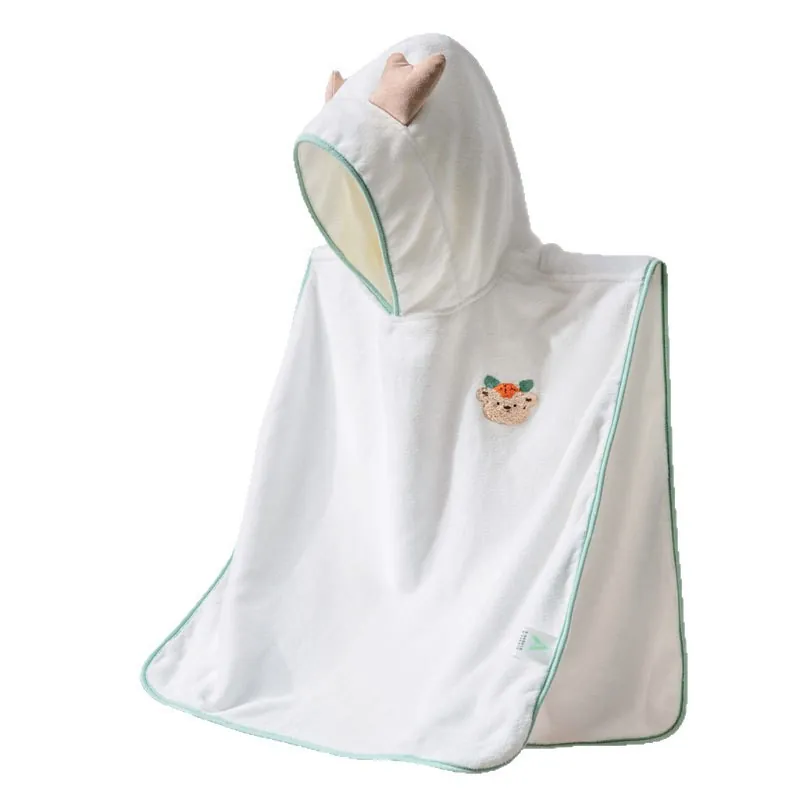
A hooded poncho bath towel should be specified as a coordinated garment-and-towel construction: absorbent terry or knit body, hood shape, neck opening, binding, embroidery or print placement and finished dimensions. For an OEM program, approve the complete worn and washed sample because hood fit, drape and edge behavior cannot be judged from a flat fabric swatch.
Define the intended use and size range
Clarify whether the poncho is for post-bath drying, beach use, gifting or a seasonal collection. Record the target age or size range, body coverage, hood depth, neck opening and finished length. If the design is intended to grow with the child, define the adjustment or grading method instead of using a vague “one size” label.
Choose the towel construction
Terry body
Specify fiber composition, loop construction, pile height, GSM, absorbency target and the approved hand feel. A heavier fabric may change drape, drying time, shipping weight and sewing difficulty, so review the full garment sample.
Knitted or smooth panels
Some designs combine terry with a smooth or knitted hood lining. Record the composition, stretch, recovery and dimensional behavior of each panel. The two materials should be checked together for shrinkage compatibility.
Binding and edge finish
Binding controls the visual frame and protects raw edges. Document finished width, material, color, seam method, corner treatment and stitch density. Check that the binding lies flat after laundering and does not twist around the hood.
Hood, neck and decoration specifications
Draw the hood profile and record depth, face opening, seam allowance, topstitching and any lining. Mark embroidery, applique or print coordinates from fixed reference points. Small decorative components should be reviewed for attachment security and destination-market requirements with qualified testing partners.
OEM buyer checklist
- Finished body length, width, hood depth and neck opening
- Fiber content, construction, GSM and color for every panel
- Binding width, seam, thread, corner and topstitch details
- Embroidery, applique or print artwork, scale and placement
- Care label, brand label, packaging fold and barcode position
- Pre- and post-wash measurements, shrinkage, skew, pilling and colorfastness checks
Sample approval workflow
- Approve physical fabric, binding and decoration strike-offs.
- Review the complete poncho for hood shape, neck fit and body coverage.
- Measure before and after the agreed wash and drying method.
- Inspect loops, seams, binding, decoration and label placement.
- Pack the approved sample as the consumer will receive it and check recovery after unpacking.
- Seal the reference and update the controlled specification.
Questions to ask your manufacturer
- Which terry or knit construction matches the intended absorbency and price position?
- How will hood and body dimensions be graded across sizes?
- Which trims, colors and packaging elements drive MOQ or lead time?
- How are binding flatness and decoration attachment checked in production?
- Which labeling and testing requirements should be confirmed for the target market?
Custom RFQ details for a hooded poncho program
For a private-label collection, send one controlled brief with the terry or knit construction, finished dimensions, hood and binding details, decoration artwork, label copy and packaging format. Ask the factory to quote sample development separately from bulk production and to state how many revision rounds are included.
- List fabric composition, GSM, colors, size range and any lining or filling by SKU.
- Show logo, embroidery, print, woven label and care-label positions from fixed reference points.
- Request a packed sample when the product will ship in a sleeve, pouch or gift set.
- Confirm target-market testing and label review for the intended destination before approving bulk production.
This RFQ structure lets purchasing compare like-for-like quotations and keeps material, sample and packaging changes visible.
Common mistakes
Avoid selecting GSM without evaluating drape, using only a flat sample to approve a hood, or approving decoration on paper instead of on the final fabric. Do not make unverified safety, absorbency or environmental claims; confirm applicable requirements with qualified laboratories and compliance specialists.
FAQ
Is a hooded poncho better than a rectangular bath towel?
They serve different use cases. A poncho can provide hands-free coverage after bathing, while a rectangular towel may be simpler to fold and pack. Choose based on the intended product experience and market.
What GSM should an OEM buyer choose?
There is no universal best GSM. Balance absorbency, drying time, drape, weight, cost and the construction of the hood and binding.
Should the hood be lined?
It depends on hand feel, warmth, appearance and construction. If lined, approve both materials together for shrinkage, seam behavior and laundering.
Develop a hooded towel collection with Lemaji
Read our baby terry towel OEM guide, explore Lemaji baby textile products, or send your hooded towel brief with size range, materials, artwork and quantity.