
Quick answer: An OEM U-shape nursing wedge is a practical feeding-support SKU when a baby brand needs a differentiated structure, configurable cover and filling, brand-ready labels and packaging, and a sample-led approval process.
For private-label buyers, the product decision is not only about the pillow shape. You need to know what the structure does for your product line, what can be changed without losing the intended support geometry, how the item will be packed, and what information a factory needs before it can quote accurately.
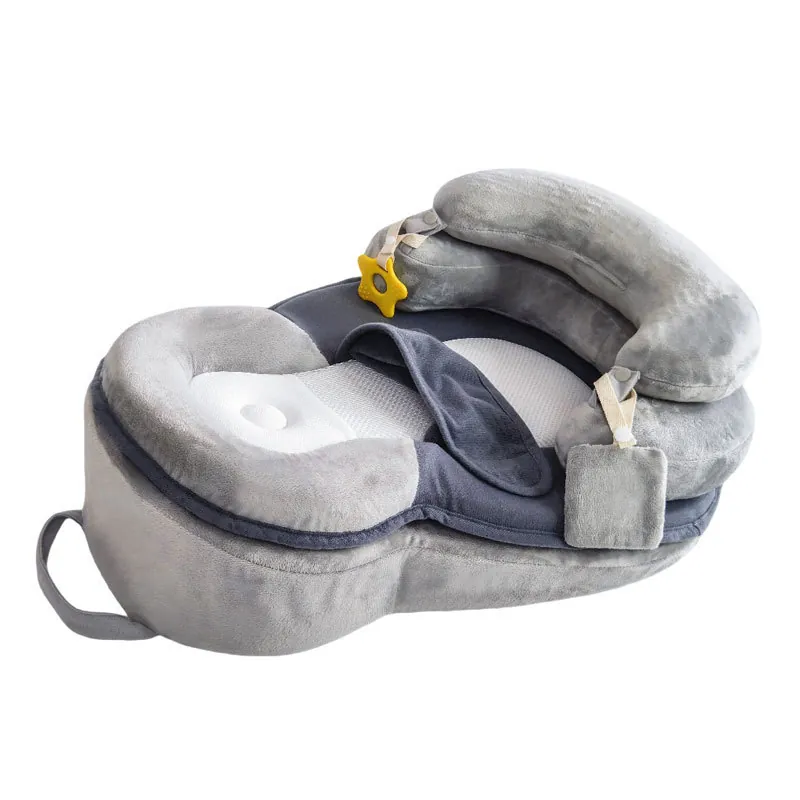
What makes the U-shape nursing wedge commercially useful?
1. A clear feeding-support position
The U-shaped form and raised support profile give buyers a recognizable feeding-support concept rather than another generic flat baby pillow. That makes it easier to build a focused product page, a nursing collection, or a private-label feeding range.
2. A structure that can be developed into more than one SKU
The modular construction can be discussed as a base for different cover, fill, firmness, size and packaging options. A buyer may use the same product concept for a standard wholesale version, a softer premium version, or a coordinated brand colorway. The final components and tolerances should be frozen through an approved sample.
3. Reference dimensions that support an RFQ discussion
The LMJ-FS02 reference data lists an overall size of 60 × 40 cm, a back height of 17 cm and an upper support depth of 28 cm. Reference unit weight is 846 g. These figures are starting points for quotation and sampling, not a substitute for the buyer-approved specification.
4. Materials and firmness can follow the market brief
The reference construction uses a polyester cover and lining with polyurethane and polyester-fiber filling. Buyers can request a different cover fabric or composition, print, fill weight or firmness, then review the hand feel, support and recovery on the sample before bulk production.
5. Brand-ready presentation
For private-label programs, the product can be developed with brand details such as a logo, woven label, care label, hangtag, instructions and individual packaging. Packaging should be discussed together with the compressed pack, carton loading and destination-market labeling requirements.
Which buyers and channels are a good fit?
- Private-label baby brands: create a distinct feeding-support product instead of competing only on a generic pillow.
- Baby-specialty distributors: request a repeatable construction with clear color, packaging and carton requirements.
- Postpartum and maternity channels: build a feeding-support range around the buyer’s preferred fabric, firmness and visual identity.
- E-commerce brands: plan compressed packing, product dimensions, imagery, instructions and carton data before the first purchase order.
For related options, compare the modular feeding support cushion, the adjustable animal-shaped feeding support and the quilted feeding support cushion. For broader procurement questions, see our nursing pillow OEM buyer’s guide.
What can be customized?
| RFQ item | What to confirm |
|---|---|
| Structure | Reference shape, support height, opening or component layout and tolerances. |
| Cover | Fabric, composition, color, print, zipper or closure and care instructions. |
| Filling | Filling type, weight, firmness and recovery expectations. |
| Branding | Logo method, woven label, wash label, hangtag and artwork files. |
| Packaging | Individual pack, compression request, carton size, pcs/carton and shipping destination. |
| Market documents | Target country, warnings, labels and any buyer-requested testing to review. |
MOQ, sample development and approval
As a current reference, wholesale programs generally start from 1000 pieces per style, while custom development is generally quoted from 1,000 pieces per design. Sample development is approximately 14 days, with the final schedule confirmed by project. Mixed colors, special construction and packaging combinations should be quoted separately rather than assumed.
A practical approval sequence is:
- Send the reference image, target dimensions, market and quantity split.
- Confirm fabric, fill, firmness, branding and packaging assumptions.
- Review the sample and record any revisions on one measurement and workmanship sheet.
- Approve the final sample before bulk production and target-market document review.
RFQ checklist for buyers
To receive a useful quotation, include:
- Target market and destination port
- Wholesale or custom-development quantity
- Preferred dimensions and support geometry
- Cover material, color, print and filling preference
- Logo, label, instruction and packaging requirements
- Compressed packing or carton-loading expectations
- Required testing, labeling or compliance documents
- Reference images, drawings or a benchmark sample
FAQ
Can the size and firmness be changed?
Yes. Size, filling and firmness can be developed around the buyer brief, then confirmed through the approved sample.
Can we use our own branding?
Yes. Logo, woven labels, care labels, hangtags, instructions and packaging can be included in the RFQ.
Can the factory help with market-specific documents?
The team can review the target market, product configuration and requested documents. Any testing or certification scope must be confirmed for the exact model, materials and destination.
Next step
Send the product reference, target market, quantity, preferred materials, branding and packaging requirements in one RFQ. That gives the factory enough information to confirm the sample route, quotation assumptions and the documents needed for your market.